
The mattress is the single most important thing you will buy for the nursery, and it is almost always the thing people buy last, in a hurry, after spending their budget on the cot. We'd flip that order. Your baby will spend somewhere between fourteen and sixteen hours a day on this surface in the first months. The cot is furniture. The mattress is where the safety actually lives.
The good news is that the brief is short. Firm, flat, and exactly the right size. Everything else in this guide is detail on those three words.
Firm — and firmer than feels right
Adult instinct says soft is comfortable. For an infant, soft is a hazard: a sinking surface can let a baby's face press into the mattress and restrict their breathing, and it makes it harder for them to shift position. Red Nose guidance is a firm, flat mattress, every sleep, and the standard for what "firm" means is not how it feels to your hand.
A quick test in the shop: press the middle of the mattress with the flat of your palm. It should barely give, and it should spring straight back with no impression left. If your hand leaves a dent you can still see after a second or two, keep walking. Memory foam, pillow-tops, plush toppers and quilted overlays all belong on your bed, not in the cot.

Flat — no incline, no exceptions
Inclined sleep surfaces have had a long run of marketing behind them and a very bad safety record, which is exactly why the ACCC's mandatory standards, in force from 19 January 2026, now sweep in inclined sleepers along with bassinets and cots. A cot mattress goes down flat. If you've been told to raise the head end for reflux or congestion, take that advice back to your GP or child health nurse before you act on it — the current guidance does not support propping the mattress.
The right size — where most people come unstuck
This is the bit worth taking seriously, because it's the bit you can get wrong even when you've bought a good mattress. Red Nose guidance is a gap of no more than 20 mm between the mattress and each side and end of the cot. A larger gap is a limb trap, and it's the most common fault we see in otherwise well-set-up nurseries.
Australian cots don't come in one size, so don't assume. Measure the inside of the cot base — length and width — and buy to that number. The sizes that cover almost everything sold here:
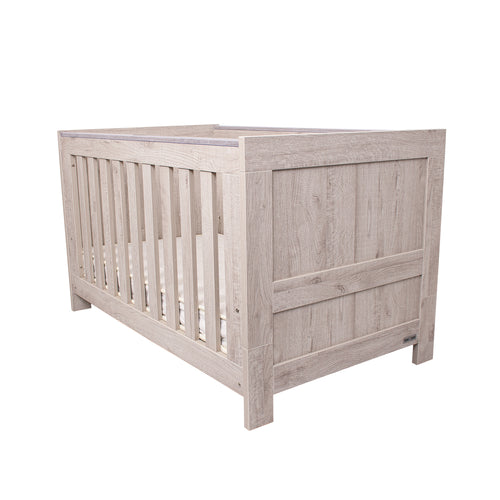
- 131 × 76 cm — the largest common Australian cot size. Our Bordeaux Cot takes this one. See the Organic Bamboo, Bamboo Pocket Spring, Innerspring and Aloe Vera in that size.
- 130 × 69 cm — the other standard AU/NZ cot footprint, in Organic Bamboo, Bamboo Pocket Spring and Innerspring.
- 120 × 60 cm — compact and European-sized cots. The Shell Innerspring covers this.
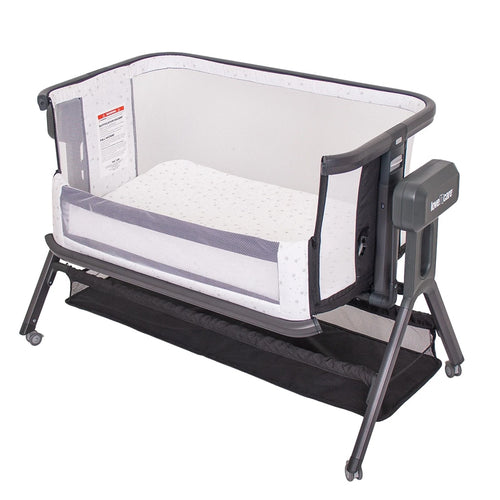
- Bassinets, cribs and sleepers — smaller again and specific to the product. The Bassinet Mattress, Vulu Bamboo bassinet mattress and 80 × 40 cm foam mattress are in Bassinet Mattresses. Bassinet mattresses should be no thicker than 75 mm.
The whole range sits in Cot Mattresses, and if you buy the mattress from the same place as the cot you take the arithmetic out of it entirely.
Measure the inside of the cot, not the outside. Then buy to the millimetre. A 20 mm gap is the limit, not the target.
Foam, innerspring or pocket spring?
All three can be safe. They differ in feel, weight and longevity rather than in safety, so pick on practicalities:
- Foam — lightest, easiest to lift for a 2am sheet change, and the most affordable. Best where the cot gets less than a few years of use.
- Innerspring — supportive, durable and holds its shape through a second child. Heavier to handle.
- Pocket spring — springs move independently, which keeps support even as your baby starts moving around at night. The premium option, and the one that stays flat longest.
The cover matters more than the fill for most families. Bamboo and Tencel covers move heat and moisture away better than polyester, which is worth something in an Australian summer. Aloe vera treatments are a comfort feature rather than a medical one — pleasant, not therapeutic.
The two things to buy with it
A waterproof protector goes on before the sheet, and you'll be glad of it inside the first week. Ours is in Mattress Protector and Dreamtime/Moonlight Waterproof. Then fitted sheets — at least three, because the changeover happens at the worst hour and you don't want to be doing laundry to get to the next one. The Dreamtime/Moonlight fitted sheets are sized to match. Both live in Sheets & Bedding.
That's the whole kit. No bumpers, no pillows, no doonas, no positioners, no soft toys — not for the first twelve months. A safe cot is a strikingly empty cot, and if it looks a little bare in the photos, you've done it right.
When to replace it
A second-hand mattress is the one hand-me-down we'd decline, even from family. Firmness degrades, and you can't see how it's been stored. For your own mattress between siblings: check that it's still flat with no permanent dips, that the cover is intact with no tears, and that it still passes the palm test. If any of those fail, replace it. If you're replacing the cot for a second child anyway, replace the pair.
Not sure which cot you're measuring for yet? Bassinet to cot covers the timing, and Setting up the nursery covers the rest of the room.